
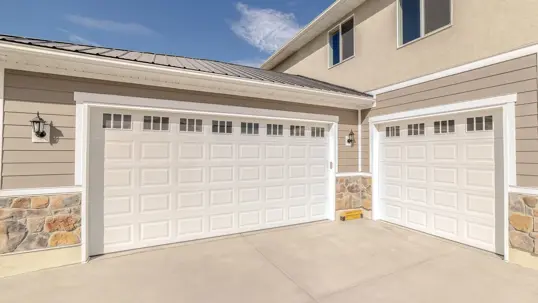
Garage doors in Wilmington face challenges that homeowners in drier climates rarely think about. One day, everything works normally. The next, after a humid afternoon or a passing storm, the door refuses to close, reverses unexpectedly, or the opener behaves erratically.
In many cases, the culprit is not a major mechanical failure. It is moisture.
Wilmington's coastal climate keeps humidity levels elevated throughout the year. Combined with frequent rain, warm temperatures, and overnight cooling, those conditions create an environment where garage door opener sensors and electronics are constantly exposed to moisture. Over time, that exposure can affect performance, trigger false sensor readings, and even damage sensitive electronic components.
Understanding how humidity impacts your garage door system can help you recognize warning signs early and avoid unnecessary frustration.
Why Coastal Humidity Is Hard on Garage Door Systems
Humidity becomes a problem when moisture in the air settles onto surfaces through condensation.
Garages are particularly vulnerable because they experience constant temperature swings. Warm, humid outdoor air enters whenever the garage door opens. As temperatures cool overnight, moisture condenses on cooler surfaces throughout the garage.
This process repeats hundreds of times each year in southeastern North Carolina.
Unfortunately, some of the most important garage door components are also the most sensitive to moisture, including:
- Photo-eye safety sensors
- Low-voltage wiring
- Electrical terminals
- Circuit boards inside the opener motor unit
- Connection points between electronic components
Even when moisture is not visible, repeated exposure can gradually affect how these systems operate.
How Humidity Affects Garage Door Safety Sensors
Garage door safety sensors are designed to prevent the door from closing when something is in its path.
These photo-eye sensors sit near the floor on each side of the opening and communicate through an invisible infrared beam. If the beam is interrupted, the door reverses or refuses to close.
Humidity can interfere with that process in several ways.
Condensation on Sensor Lenses
When moisture forms on the sensor lens, the infrared beam may become distorted or weakened.
The sensor can mistakenly interpret this as an obstruction even when nothing is present. Homeowners often notice:
- The door starts closing and immediately reverses
- The door will not close using the remote
- The opener works intermittently
- Problems appear after rain or humid weather
Internal Moisture Damage
Over time, moisture can enter small gaps in the sensor housing.
This may lead to:
- Corroded electrical contacts
- Reduced sensor performance
- Intermittent communication failures
- Flickering indicator lights
What starts as an occasional nuisance can eventually turn into complete sensor failure.
What Humidity Can Do to Opener Electronics
While sensors often show symptoms first, the opener itself can also suffer from long-term moisture exposure.
Modern garage door openers rely on electronic control boards that process commands from remotes, wall controls, and safety systems.
When moisture reaches these components, corrosion can begin to develop on terminals, relays, and circuit board connections.
As the problem progresses, homeowners may experience:
- Random door reversals
- Delayed responses
- Intermittent operation
- Lights that flicker unexpectedly
- Unexplained opener malfunctions
Unlike a dirty sensor lens, internal electronic damage usually does not improve on its own.
Signs Humidity May Be Causing Your Garage Door Problems
Humidity-related issues often follow weather patterns.
That makes them easier to overlook because they may disappear temporarily before returning again.
A few common clues include:
Problems After Rainstorms
If your garage door behaves normally most of the time but starts acting up after heavy rain or extremely humid days, moisture could be affecting the sensors or wiring.
Sensor Lights That Flicker
Most safety sensors display steady indicator lights when functioning correctly.
Lights that blink, dim, or randomly turn off may indicate condensation, corrosion, or moisture-related interference.
Inconsistent Door Operation
Mechanical problems tend to remain consistent.
Humidity-related electrical problems often come and go depending on weather conditions, making them feel unpredictable.
Recurring Sensor Alignment Issues
If the sensors repeatedly appear to "fall out of alignment" despite adjustments, moisture damage may be affecting the internal electronics rather than the positioning itself.
What Homeowners Can Safely Do
Not every humidity-related issue requires a repair call.
There are a few simple maintenance steps homeowners can safely perform.
Clean the Sensor Lenses
Dust, dirt, and moisture can collect on the photo-eye lenses.
A soft microfiber cloth is usually enough to remove buildup and improve visibility between sensors.
Check Sensor Alignment
Make sure both sensors face directly toward one another and that the indicator lights remain steady.
Even minor movement over time can affect the operation.
Improve Garage Ventilation
Reducing moisture inside the garage can help minimize condensation.
Options may include:
- Using a portable dehumidifier
- Increasing airflow with fans
- Opening windows when conditions allow
- Improving weather sealing around the garage
These measures won't eliminate humidity completely, but they can reduce moisture buildup.
When Professional Service Makes Sense
Some humidity-related issues go beyond basic maintenance.
Professional service is often recommended when you notice:
- Visible corrosion on wiring or terminals
- Cracked sensor housings
- Persistent problems after cleaning and alignment
- Signs of internal opener malfunction
- Recurring issues tied to weather conditions
Garage door electronics involve low-voltage systems, safety circuits, and components that may require testing or disassembly. Proper diagnosis often saves homeowners from replacing parts unnecessarily.
Preventing Future Humidity-Related Problems
While Wilmington homeowners cannot control the weather, they can reduce the effects of humidity on garage door systems.
A few preventive steps include:
- Scheduling periodic garage door maintenance
- Replacing worn weatherstripping
- Addressing rust early
- Keeping sensors clean
- Having opener electronics inspected before peak summer humidity arrives
Routine inspections often identify small issues before corrosion spreads to more expensive components.
Address Humidity Issues Before They Lead to Bigger Repairs
Humidity is part of life along the North Carolina coast, but recurring garage door problems should not be.
If your garage door frequently reverses, refuses to close, or behaves differently after humid weather, the issue may involve the sensors, wiring, or opener electronics. Identifying the source early can help prevent more extensive repairs later.
Overhead Door of Wilmington provides garage door maintenance, garage opener repair, garage door repair, and sensor-related troubleshooting for homeowners throughout the Wilmington area.
Garage door acting up after humid weather? To schedule an inspection or discuss recurring garage door issues, call (910) 463-9890 or send us a message online.